No More "Left on Read": Our 2026 Blueprint for NYC Veterans
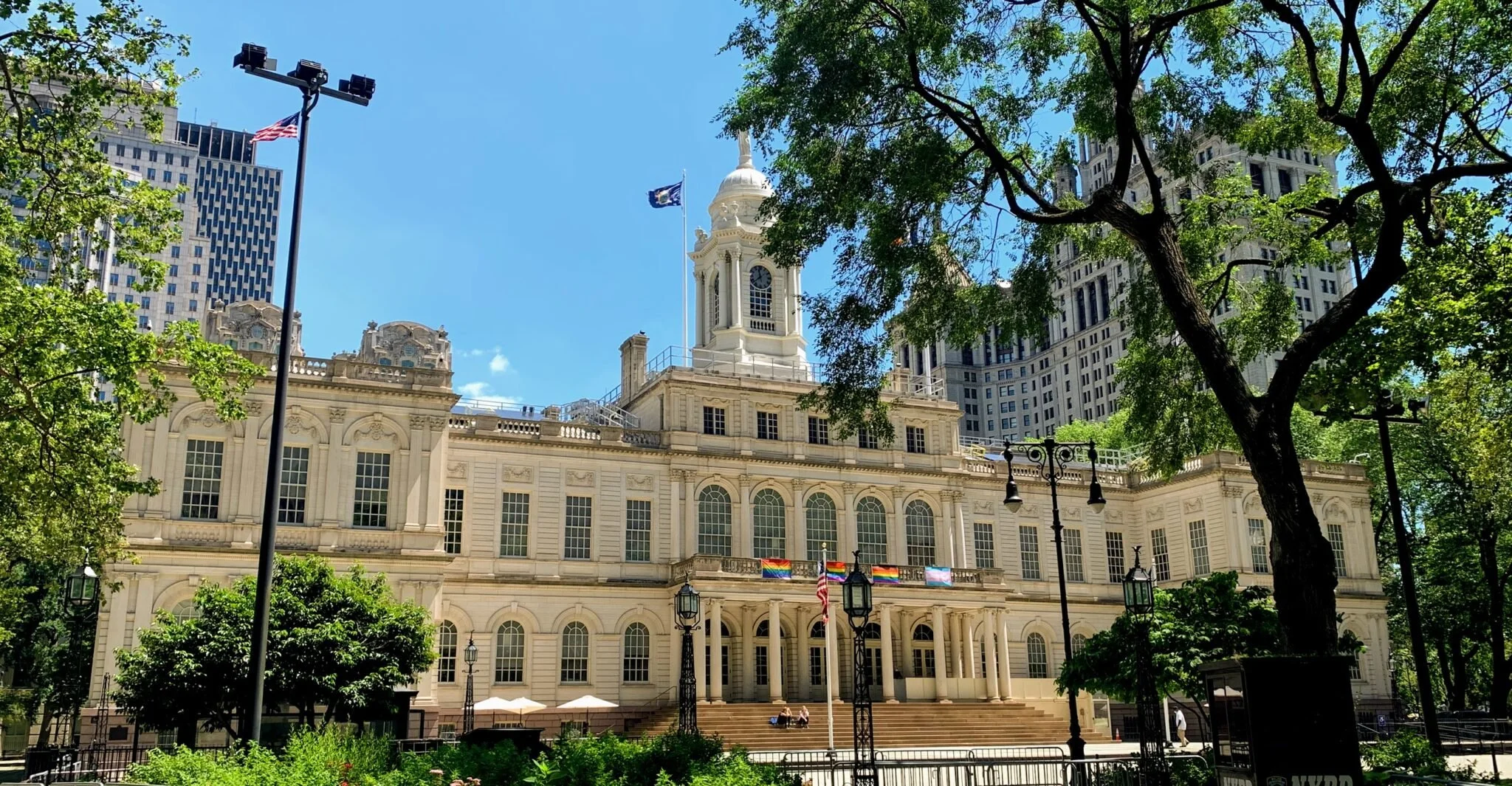
NYC City Hall
Every November and May, our social media feeds are flooded with "Thank you for your service" posts from elected officials. But for the 200,000+ veterans living in the five boroughs, gratitude doesn’t pay the rent, and a tweet isn’t a health care appointment.
As we enter 2026, Five Borough Veterans is drawing a line in the sand. Soon-to-be-Mayor Zohran Mamdani established 17 transition committees comprising 400 advisors to help guide his path into office, yet not one committee was dedicated to the veteran community. Furthermore, the Public Advocate’s office, the city’s supposed watchdog, continues to leave our advocates "on read."
Here is our Pillar-Based Mandate for the new administration and the City Council:
Health and Wellbeing
In the realm of Health and Wellbeing, the federal safety net is fraying at the seams as the VA undergoes a massive reduction in force, aiming to eliminate nearly 35,000 medical positions nationwide by the end of 2025. Locally, this means fewer clinicians at the Bronx and Manhattan VAs and longer wait times for specialized care. Despite this, New York City is following suit with its own cuts; the Joseph P. Dwyer Peer Support Program, a community-based solution for veteran-to-veteran crisis prevention, is slated to be slashed from its $1.1 million level back to a baselined amount of just $416,000 in the FY 2026 budget.
NYC must step up where the federal government is stepping back, and we need the City Council to baseline Dwyer funding at $1.5 million immediately to ensure local, reliable crisis intervention.
Education & Economic Opportunity
The "Radical Affordability" agenda must address the widening veteran employment gap and procurement disparity. As of 2025, veteran unemployment for those aged 18–24 spiked as high as 26.9%, yet the Department of Veterans’ Services (DVS) remains the smallest agency in the city with a proposed budget of just $5.9 million, a half-million dollar cut from the previous year. Furthermore, while the city awards non-competitive contracts up to $1.5 million to MWBEs, there is no equivalent mechanism for Service-Disabled Veteran-Owned Businesses (SDVOBs).
The Mamdani administration must restore the DVS budget to $10 million+ and establish a 6% citywide procurement mandate for SDVOBs to provide the same level of economic equity currently afforded to other underserved business owners.
Home & Family Support
To address foundational needs, the focus must remain squarely on the housing crisis that continues to displace our community. While city officials cite broad progress, the reality on the ground is a profound scarcity of available homes. NYC’s housing vacancy rate has hit a historic low of 1.41%, and for apartments renting under $1,100, that rate is a near-impossible 0.39%. This means that even with a voucher in hand, a veteran is statistically unlikely to find a home. While the administration recently announced a 10% preference for veterans in the housing lottery, this gesture lacks teeth without the transparency our community has fought for. Last term, the City Council "filed" away a legislative package that included critical reporting requirements for veteran preferences in Mitchell-Lama housing, essentially killing the bill.
The Public Advocate must audit the housing lottery process for veteran families, and the Council must immediately reintroduce and pass the housing preference and transparency package. "Radical Affordability" is just a slogan if the lowest-income veterans are left to fight for a fraction of one percent of the city's housing stock.
Justice, Rights & Civic Engagement
Our final pillar is where the first three, Health, Opportunity, and Housing, either become law or become empty promises. Currently, the veteran community in New York City is facing a systemic erasure from the political process. While our elected officials are quick to post "thank you" messages on social media, the actual legislative and administrative record tells a different story of exclusion and neglect.
The most recent example of this exclusion is the formation of Mayor-elect Zohran Mamdani’s transition team. Despite appointing 400 advisors across 17 different committees, ranging from "Worker Justice" to "Arts & Culture”, not a single committee was dedicated to the specific needs of the 200,000+ veterans who live in this city. This lack of representation at the foundational level of the new administration is mirrored in the City Council, where critical legislation is routinely "filed" or left to die in committee. For example, Int 0686-2024, which would have added a veteran representative to the Street Vendor Advisory Board, was recently filed at the end of the session despite having significant co-sponsorship.
Furthermore, our advocates have been consistently sidelined when reaching out to the Public Advocate’s office to discuss the needs of our community. Unanswered emails, unanswered phone calls, empty apologies when they show up in person. Beyond the Public Advocate, we have no representation on the City Council. Even a recent bill to help strengthen our voice in government, Int 0684-2024 (requiring every Community Board to have a veterans committee), was swept away.
To correct this, we are calling for three immediate actions from the new administration and the City Council. First, we call for the retention of Commissioner James Hendon at the Department of Veterans’ Services. Stability is a civic right; replacing leadership now, while the VA is cutting staff and we have no say in City Council, would reset years of progress and silence our voice during a critical transition. Commissioner Hendon, even with a severely underfunded agency, has proven that when our community needs support, he shows up. Second, the City Council must move beyond symbolic packages and immediately hold standalone, floor-of-the-chamber votes on high-impact bills like Int 0684-2024, which mandates a Veterans Committee for every Community Board. Finally, we call for a permanent veteran seat on all mayoral advisory boards to ensure that "Radical Affordability" actually includes the people who served.
To Our Community: Why 2026 is Our Year of Action
To our fellow veterans and military families across the five boroughs: this transition is a test of our collective resolve. For too long, our "service" has been treated as a historical fact to be honored in speeches rather than a living, breathing part of this city’s working class that deserves a seat at the policy table. When we are left out of 17 different transition committees and ignored by the very offices meant to protect us, it is a signal that our silence has been mistaken for satisfaction. We cannot afford to be spectators this year. With the VA cutting frontline medical staff and the city's housing market reaching a breaking point, showing up in 2026 is about survival. We must turn our "thank you for your service" social media mentions into a mandate for legislative action. Attend a Community Board meeting, testify at City Hall, or hold your Council Member accountable for a standalone vote; your voice is the only thing that will turn these four focuses into law. We have defended this country; now it is time to defend our place in this city.
About Five Borough Veterans
Five Borough Veterans is a non-partisan advocacy organization dedicated to the 200,000+ military-connected New Yorkers living across the city’s five boroughs. Founded on the principle that veteran success is a cornerstone of a healthy New York, we focus on four strategic pillars: Health and Wellbeing, Education & Economic Opportunity, Home & Family Support, and Justice, Rights & Civic Engagement. By leveraging data-driven advocacy and community-led organizing, we work to bridge the gap between ceremonial gratitude and substantive policy. Our mission is to ensure that every New Yorker who served has the housing, healthcare, and economic equity required to thrive in the city they call home.
